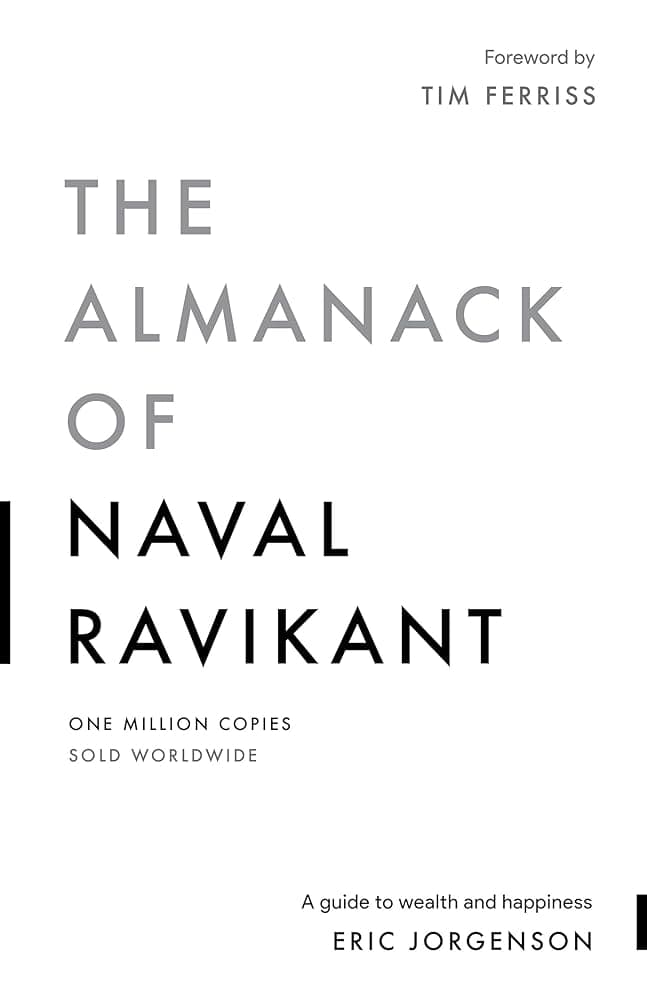
The Almanack of Naval Ravikant
by Eric Jorgenson
A Guide to Wealth and Happiness
The Almanack of Naval Ravitkant
Book is so full of many great quotes
I love this book. I come back to it every six or so months, and each time I wish I had came back to it sooner.
The main topics it covers are:
- Responsibility & Meritocracy: You are responsible for your own happiness, health and wealth
- Presence: Heavy themes of Buddhism throughout the book
For me, the best part of this book is the starting few pages of the Learning Happiness chapter. Page 128 to 132 to be exact. In these five pages, the definiton, self-responsibility and learned helplessness of happiness is explored.
It references the increasing pressure of modern day capitalism on individuals.
“We constantly walk round thinking “I need this” or “I need that” trapped in the web of desires. Happiness is the state when nothing is missing. In that absence, for a moment, you have internal silence. When you have internal silence then you are content, and you are happy.”
“At any given time, when you’re walking down the streets a very small percentage of your brain is focused on the present. The rest is planning the future or regretting the past. It keeps you from seeing the beauty in everything and for being grateful for where you are, an incredible experience.”
A repeated theme is buddhism, as shown by Naval’s definition of happiness.
“Happiness to me is mainly not suffering, not desiring, not thinking too much about the future or the past, really embracing the present moment and the reality of what is, and the way it is.”
And finally talks about perceptionism and our inability to accept responsibility for our own happiness:
“The world just reflects your own feelings back at you. Reality is neutral. Reality has no judgements. To a tree, there is no concept of right or wrong, good or bad. You’re born, you have a whole set of sensory experiences and stimulations and then you die. How you choose to interpret them is up to you - you have this choice.”
“We spend so much time and effort trying to change the external world, other people, and our own bodies - all the while accepting ourselves the way we were programmed in our youths. We accept the voice in our head as the source of all truth. But all of it is malleable, and every day is new. Memory and identity and burdens from the past preventing us from living freely in the present.”
“If you look at little children, on balance, they’re generally pretty happy because they are really immersed in the environment and the moment, without any thought of how it should be given their preferences and desires.”
“Our lives are a blink of an eye firefly in the night. You’re just barely here. You have to make the most of every minute, which doesnt mean you chase some stupid desire for your entire life. What it means is every second you have on this planet is very previous, and it’s your responsibility to make sure you’re happy and interpreting everything in the best possible way.”
These are such powerful concepts and the potential empowerment from them provides excitement. I believe if you keep them in your mind (whilst being preset of course…) each day, you’d like a much more enjoyable life. It is a greater question how to do this however. These quotes are often powerful when relatively contrasting to your current state of mind. When you increase alignment, the contrast reduces and their power wanes. It requires persistence to remind yourself, even when the quotes weaken, of these thoughts to ensure consistent alignment across your life.